Showing posts with label lawncarespecialist. Show all posts

Friday, January 6, 2023

Lawn Care Guide To Pruning Your Plants


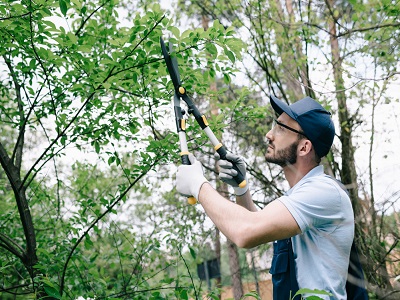
Pruning is like “wounding” your plants and giving them an excellent trim that can make them healthier. When done right, this type of landscaping method can actually develop better branches or leaves. This particular lawn care process of pruning consists of eliminating dead or broken stems and branches and plants severely plagued with parasites which might be a lot more at risk of illness.

The benefits of pruning include the following:

  • Promotes branching
  • Increase flower growth and fruit production
  • Help sunlight and air reach other parts of the plant
  • Gives the plant a cleaner and more compact look
  • Can be a safety measure to avoid contact with utility lines

When is the best time to prune?

For houseplants and outdoor spring-flowering plants

According to landscaping professionals, the most effective time to prune is in the late springtime to very early summertime. This is when the days are warming up and the sunlight shines for long hours to help the plant recuperate from the demanding experience of being cut down. Pruning is also advisable after blooming.

Trees and summer-flowering plants

Lawn care Conway specialists recommend pruning at the end of the winter season or the start of spring. However, if pruning is really needed, it could be done at any time when the weather condition is not extremely rough such as the extremely cold winter season or warm and dry summer days.

In case you are preparing for a wedding celebration or other gala occasion in your yard, attempt to arrange your trimming 2-4 months prior. This will certainly enable your plants time to recoup completely.

What tools will I use for pruning?

There are different devices for pruning depending on the size of your plants. You can use your hands to squeeze back little flowers.

  • Gardening shears: are used for stems or thin branches as much as 1/2″ in size.
  • Loppers: are suggested for branches to an optimum of 1 1/2″. For both shears and loppers, a bypass design is suggested over the anvil, which has the tendency to crush instead of cutting easily.
  • Tri-edge folding sawsare developed for reducing branches from 1 1/2 -3″.
  • Pole pruners come in handy when you have to get to high development.

Before using and cutting tools, make sure that they are sharpened. Clean sharp devices are healthiest for your plant. Blades should be sharpened regularly and sanitized with bleach, and alcohol, to prevent the disease from getting into the plant.

Prune when plants are completely dry and also angle your blade slightly. This will certainly prevent water from collecting in the cut end of the stem or branch, which might promote fungal development.

It is recommended to entrust bigger trees to professional landscaping companies, as slipshod cutting could endanger both the health and wellness of the trees and compromise the safety and security of neighboring plants, and people.

Call Conway Lawn Care Service for professional landscaping and lawn care services.

Like our Facebook page for more great info about lawn care services.

Conway Lawn Care Service
Conway, SC 29526
843-353-2259
http://conwaylawncareservices.com/

Monday, May 30, 2022

Lawn Care Tips: Dealing with New Sod Lawns

lawn-care-3-300x200.jpgSod Lawn or turf lawn is basically grass or turf that has already been planted and held together by soil and other various materials. This type of lawn is mostly used in golf courses but can also be used in your yard. If you recently bought a new sod lawn and had it installed, you need to understand a few basic lawn care guides. You need to deal with taking care of your brand-new sod lawn to make it last. One thing you need to remember is not to buy one until you are ready to mount it. New sod lawns should never be left for more than a few days or they will just gather dust and eventually dry out. When you are most likely to buy grass, you need to choose one that is freshly cut. You need to additionally try to find turf that has been planted in soil that resembles those in your backyard. When you mount your sod lawn, try not to leave any type of space in between them. This will allow weeds to expand and grow.

Care Guide for New Sod Lawns

First to Second Weeks According to Conway Lawn Care Service, a newly laden sod lawn should be watered regularly so as not to absorb heat. Water it enough so it could pass through about six inches of depth. Do these for the first two weeks after the turf has been mounted. You could sprinkle your brand-new turf yard as much as 5 times a day and do not worry about overwatering them. The trick is maintaining the lawn damp to give the roots time to settle. Professionals of lawn care in Conway SC suggest keeping family members and pets off your brand-new lawn until it's time to mow it. More often than not, sod lawns are ready to be cut approximately two weeks after installation. Nonetheless, if your yard was set up in the cool months, it might be a while before mowing is needed. Remember that it is far better to cut high than to ruin your brand-new yard Third and Fourth Weeks Throughout the 3rd and 4th weeks, another lawn care tip you do is begin to lessen watering your lawn but at least increase how much time you water. The roots, at this point, have already settled into the ground due to constant watering which makes them more sturdy. You can check this by pulling grass during the fourth week, you must use also use fertilizer on your sod lawn.

Solutions for Sod Lawn Problems

Roots Are Not Settling If you believe that your lawn’s roots are not settling quickly enough, you should at least water less frequently but with more soaking time. Also, you should be able to recognize that, sod lawns grow fuller and with more color in complete sunlight compared to those under the shade. Grass is Shrinking If this is the case, your grass may not be getting sufficient water. To solve this problem, lawn care specialists suggest starting raising the period and also regularity of watering. Also, cover gaps to avoid the growth of weeds. Drought Spots If you notice any bluish-grey spots on your grass, these could be drought spots. If you are making use of a lawn sprinkler to water, make certain it is getting to the locations with such spots.

For more professional lawn care tips, Call Conway Lawn Care Services and we will be happy to talk to you.

Conway Lawn Care Service Conway, SC 29526 843-353-2259 http://conwaylawncareservices.com/

https://conwaylawncareservices.com/lawn-care-new-sod-lawns/

Wednesday, May 25, 2022

Lawn Care During Times Of Drought

lawn-care-2-300x169.jpgAlthough drought conditions are common in many areas of the country, it doesn't mean that we should give up on our lawns and accept the harsh realities. There are lawn care methods that can be used in drought conditions. Technology is continually improving drought-tolerant varieties of lawn grasses. It's not possible to solve all drought problems. Instead, you need a multi-pronged strategy that will keep your lawn strong through prolonged dry spells. Lawn Care: What To Avoid There are many lawn care maintenance techniques that you can use to help your lawn in times of drought. It is important to avoid causing damage to the lawn. A lawn can be extremely stressed by drought conditions so it is important to avoid further stress. Be patient and don't do any aerating or detaching. This will ensure that the plant has all the moisture it needs. Basics of Watering Your Lawn Many lawns are too watered. Knowing how to water your lawn properly will help you water it when there is drought or water restriction. It is best to water your lawn infrequently and deep between 3:00 AM - 6:00 AM. This will reduce evaporation and ensure that your grass thrives. Even water-loving grasses like Kentucky bluegrass can survive and thrive with less water than they normally receive. Summer Heat: How to Deal It is often not prolonged drought that causes lawn stress, but the regular heat of summer that can cause it to become irreparable. The best thing for your lawn is to manage the stress and prepare it for dry conditions. To combat the heat, keep the cut height at least 3-4 inches high and encourage deep rooting. It is possible to have serious consequences if you mow the lawn too frequently or too short during droughts. The worst case scenario is that the lawn will be damaged and worn and it won't recover when the rains and cooler temperatures return. The lawn should be kept high to retain the important photosynthetic leaves material and help with moisture retention. Drought-tolerant Lawn Grass Some grasses can thrive in drought conditions, and some grasses can tolerate it. These traits can be preserved during breeding to create unique grass cultivars that are drought-tolerant and attractive. Although drought-tolerant grasses were not traditionally used for lawns, new cultivars, particularly fescue species are drought resistant and suitable for lawns. You can ask the professionals in lawn care in Conway SC to help you. Lawns that are too big There have been many areas in the country that have suffered severe droughts and water shortages. This has led to restrictions and bans as well as cultural shifts toward water conservation. It is possible to reduce the size of a lawn if water is scarce. Artificial Grass Although artificial grass may not be everyone's preferred aesthetic, it is sometimes the best option. Artificial grass is not recommended in desert environments where there are water restrictions. A small patch of artificial turf may be enough to provide a sitting area or pet area. Artificial turf is very easy to maintain and can even look like real grass.

Call Conway Lawn Care Service now if you need help in maintaining your lawn.

Conway Lawn Care Service Conway, SC 29526 843-353-2259 http://conwaylawncareservices.com/

https://conwaylawncareservices.com/lawn-care-during-times-of-drought/

Monday, June 22, 2020

The Ultimate Lawn Care Guide For Every Homeowner

lawn-care-300x200.jpgAn important aspect of lawn care and maintenance is basic repair and solutions to common backyard problems. Aside from taking care and maintaining your backyard landscape, homeowners should also learn about basic repairs and solutions so that they can instantly resolve common problems in their backyard.

Here are some of the common lawn care problems that most homeowners encounter as well as tips on how to resolve them.

  1. Eroding backyard slope
This is most common for those landscapes with multiple levels and terrains. A backyard slope is indeed a beautiful addition to a backyard with a hilly terrain. On the other hand, it may cease to be a great idea once the rainy season begins. Rainwater will cause the slope to wash down to the lower level where your flower bed or patio is located. What is worse is that storms and continuous rains may cause the entire slope to tumble down. For this problem, experts recommend installing a dry creek bed on the slope to control the erosion. When the rain comes, rainwater will fill the dry creek bed and prevent the rainwater from causing slope erosion. To create a dry creek bed, all you need to do is create a gully or trough and fill it with rocks to direct the flow of water away from the slope and onto you drainage or somewhere else in our backyard. It works best if you use different sizes of rocks as these will allow the creek bed to carry and direct water more effectively.
  1. Unhealthy grass growth
This often happens if you plant grass near or underneath large trees. You should know that heavy shades from large trees prevent the grass from growing healthy and full. Thus, you cannot plant grass in areas where your large trees cast heavy shade. To avoid these empty areas in your backyard, consider planting shade-tolerant plants instead. You can also opt to create attractive garden paths in these areas to add more beauty and appeal to your landscape. Make sure you consult professionals when choosing which specific plants to use in these shaded areas. Note that you need to choose plants that are shade tolerant and are able to cope with dry soil and root competition with your large trees. Conway Lawn Care Service can help you choose shade-tolerant plants and plan for your shade garden paths.
  1. Growing plants on clay soil
Some homeowners have clay soil in their gardens and backyards, especially in the Myrtle Beach area. The only problem to this is that clay soil can get mushy when wet and hard like concrete when dry. Thus, growing plants in this particular type of soil can be a challenge. To make it easier to grow plants in clay soil, lawn care Conway experts suggest adding expanded shale to the clay soil. The expanded shale will create cavities in the clay soil where oxygen and water can be stored; thus preventing its mushy texture when wet and concrete-like appearance when dry. You should know that the primary reason why plants are having difficulties growing in clay soil is that they do not get sufficient amount of oxygen and water from the soil. Keep in mind that they need these in order to make their own food, survive and grow. Adding shale to the clay soil will provide the soil with cavities where it can store oxygen and water for the plants’ use. Note that adding shale is done only once. It is not like fertilizer or compost that you need to add more than once throughout your lawn’s lifetime.

For more expert lawn care tips, call Conway Lawn Care Service now.

Conway Lawn Care Service Conway, SC 29526 843-353-2259 http://conwaylawncareservices.com/

http://conwaylawncareservices.com/lawn-care-guide-homeowner/