Thursday, June 8, 2023

Guide To Swale Landscaping


Does your home or business have too much overflow from rain or melting snow? All that fluid could not just make your lawn a slushy mess; it could also endanger the architectural security of your house. Digging a swale in your backyard will certainly decrease or remove this major trouble. A swale will likewise aid, preserve water and develop a charming area, reducing the upkeep of your landscaping at home.

But what exactly is a Swale, and the need to build one in your home or office?

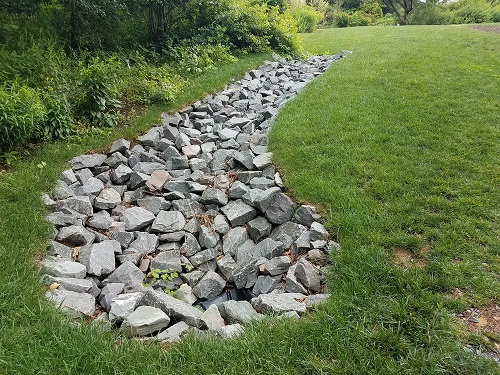
The landscaping design term “swale” describes a superficial trench, which might be dug on a home for three vital relevant objectives:

  • to capture tornado water
  • to route the water far from your residence
  • to slow down the water’s motion so it could be slowly soaked up right into the soil

Functions of Swale Landscaping

  1. A swale generally is created to comply with the all-natural shapes of the bordering landscape, commonly with a berm along the reduced side.
  2. A driveway swale forms your drive on a single side or both to maintain drainage from streaming into your garage or residence.
  3. A swale might be integrated with below-ground piping to manage your roofing overflow.
  4. The conventional swale measurements typically vary from six to 18 inches deep and eight to 24 inches large, varying on the quantity of water you are handling.

lawn-care-1-300x200.jpgThe several advantages of swale landscape design

  1. Excavating a swale will certainly profit your landscape in a variety of means. You will certainly
  2. Stay clear of hurricane water merging around your home and also avoid damage to the structure.
  3. Swale helps hold back flooding of your home, garage, backyard, and maybe your next-door neighbor’s residential property.
  4. Decrease soil disintegration as well as loss of premium quality topsoil.
  5. Accumulate rain much quicker than with a barrel or storage tank system.
  6. ” Reuse” rain to water your yard for a prospering, reduced upkeep landscape.

Getting Started With Swale Landscaping

Get in touch with a one-call facility for clearance before starting with the swale building or another home improvement that includes excavating to avoid hitting pipelines.

Furthermore, talk to the building authority in your location to see whether you’ll require a license for the task. Numerous city governments have passed rigorous regulations worrying landscape design jobs that can impact the groundwater system.

Get in touch with an expert landscape professional to strategy and also execute your job by the most effective means.

If you need more information about swale landscaping or lawn care techniques, do not hesitate to call Conway Lawn Care Services.

Like our Facebook page for more information about lawn care and landscaping services.

Conway Lawn Care Service
Conway, SC 29526
843-353-2259
http://conwaylawncareservices.com/

Wednesday, May 31, 2023

Fundamental Lawn Care Guide to Lawn Mowing


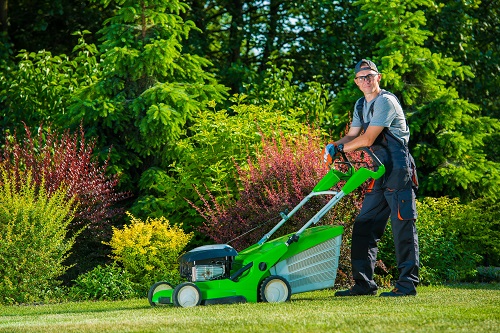
If gardening is your hobby or lawn care is your career, then using a lawnmower is a big part of your daily life. Did you know that accidents can happen when you use lawnmowers? Individuals have actually reported the loss of fingers and toes, damaged or disjointed bones, deep injuries as well as cuts, and numerous other injuries.

The numbers do not seem to go down as the years passed. This is why you need to be extra careful when handling lawnmowers. By adhering to some easy yet reliable lawn maintenance and mowing security guide, you could avoid being one of those injured statistics.

Security Guide You Need To Know

  1. In some areas, young adults who try to find extra money commonly do so by taking on lawn mowing jobs. Precautionary measures must be taken into consideration while letting them handle the lawn mowing equipment. It is suggested that kids listed below the age of 14 must not be allowed to use ride-on mower devices. If the kid is not yet in his teenage years, walk-behind mowers are a large no-no. However, with the improvement in modern technology, there are lawn mowers offered out there, which stop working when you raise your hand from the handle. These types of devices will undoubtedly add additional safety features to lawnmowers, thus preventing injury.
  2. An additional essential lawn mowing security guideline that must be adhered to is to identify that the lawn mower driver is putting on protective clothing and closed footwear. Wearing closed shoes not only keeps you comfortable but protects you from pain and injury. Other protective gears you need to wear are safety glasses to protect your eyes against eye injuries.
  3. lawn-care-2-4-300x199.jpgPrior to beginning with grass cutting, it is constantly a good idea to remove rocks, playthings, and other things which might fly during lawn mowing that can also cause injuries. Likewise while cutting the grass, ask others to maintain a safe range away from the devices to guarantee their security.
  4. Each time you refuel or start your lawn mower engine, do it outdoors and not in enclosed areas such as the garage. Another thing you need to remember prior to refueling is to make sure that the lawn mower’s electric motor is turned off and cooled down.
  5. An additional grass-cutting safety and preventative measure you should remember is that the blades of the lawn mower need to be effectively changed to ensure that grass or dirt is not stuck in the blades. This blade modification should be carried out by a grown-up after turning off the lawn mower motor.

If you want to be really sure and safe with regards to mowing your lawn, hire lawn care experts. These companies provide proper skills and safety training to their employees. You can be sure you get the best lawn mowing service without worrying about safety. By following the guide above, you are sure to prevent any danger and keep a tidy and attractive landscape.

Prevention is better than cure when it comes to lawn mowing, which is why you can call Conway Lawn Care Services. We take pride in providing high-quality and safe landscape services.

Like our Facebook page for more great info about lawn maintenance services.

Conway Lawn Care Service
Conway, SC 29526
843-353-2259
http://conwaylawncareservices.com/

Wednesday, May 24, 2023

Mastering Summer Lawn Care


As we embrace the arrival of summer, it’s essential to equip ourselves with effective strategies to keep our lawns thriving under the scorching sun. Adequate watering takes center stage, with the golden rule being to provide at least one inch of water per week to maintain a healthy and balanced lawn. To help you achieve optimal results, we’ve gathered valuable tips from lawn care professionals.

Summer Lawn Care Tips:

Smart Watering:

Once you commence watering, consistency is key. Instead of shallow and frequent watering, adopt a deep watering approach at less frequent intervals. This method encourages deeper root growth, making your lawn more resilient to drought and reducing the need for excessive lawn maintenance. Water your grass in the early morning hours to allow ample time for water absorption into the soil rather than losing it to evaporation. Avoid watering in the evening to prevent the onset of fungi and diseases. Additionally, invest in practical and efficient watering tools to simplify the process.

Fertilization:

Applying high-quality fertilizer during the early morning hours of summer yields the best results. Premium fertilizers provide extended feeding to your grass while minimizing the risk of heat-induced damage.

lawn-care-2-3-300x199.jpgOptimal Grass Length:

Throughout summer, it’s beneficial to maintain a longer grass height. The crown of the grass, where new growth emerges, can be safeguarded by longer blades. This shading effect helps protect the crown from excessive sun exposure and prevents it from scorching.

Battling Grass Diseases:

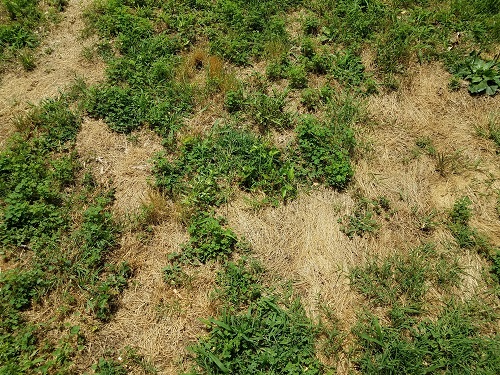
Brown patches are a common sight during summer, often signaling fungal diseases resulting from neglected heat stress and grub damage. To accurately identify the issue, closely inspect your grass blades. If you notice black or gray banding running horizontally across the blades, consult Conway Lawn Care Services. Their experts can determine the specific disease and recommend an appropriate fungicide for healthier grass growth.

Mulching:

To protect newly grown lawns, apply a thin layer of mulching straw. Just one or two bundles can cover 1,000 square feet. After approximately three weeks, remove the straw to allow for proper germination.

Preserving a layer of grass clippings on your lawn helps retain soil moisture and acts as a natural fertilizer. However, be mindful not to leave excessive amounts, as it can lead to thatch build-up. Mulching with clippings works best when the lawn is regularly mowed and not allowed to grow too long. Wet or lengthy clippings tend to clump together, hindering grass growth and causing potential issues.

Always remember that warm-season grass thrives in southern regions, experiencing accelerated growth as temperatures rise during summer. Grass varieties like Bermuda, St. Augustine, and Zoysia flourish when soil temperatures range between 70 and 90°F, accompanied by pleasant air temperatures of 80 to 95°F. They enter a dormant phase as cooler weather sets in.

Selecting the most suitable grass type for your specific region will ensure your lawn looks its absolute best. For further summer lawn care guidance, reach out to Conway Lawn Care Services, where their experts will be delighted to provide additional tips and advice.

Like our Facebook page for more great info about lawn care services.

Conway Lawn Care Service
Conway, SC 29526
843-353-2259
http://conwaylawncareservices.com/

Friday, May 12, 2023

Lawn Care Tips for Every Season


Oh, the feeling of walking onto a freshly mowed lawn without shoes. It’s a wonderful feeling. It’s especially rewarding when you discover that the lawn you love will also pay for itself when you decide to sell. That’s why it’s crucial to pay attention to regular lawn care.

A lawn that is well maintained will almost always return 100% of the investment.

These lawn care tips will help you maintain a lush, green lawn from spring through fall.

Spring Lawn Care Tips

Preparation is key to a successful lawn care job. This is a basic part of lawn care in Conway SC.

Sharpen your mower blades for clean cuts. Sharpen blades to ensure clean cuts.

During the grass-cutting season, sharpen your mower blades every month. Keep a spare blade on hand (around $20) to ensure that you always have a sharp blade.

Replace your sparkplug and air filter with new ones ($3-$5). It’s not necessary to replace your sparkplug each season. However, it is easy and you should do it every year.

Purchase new gas. Gas left out over the winter may accumulate moisture, which can damage small engines. Use regular gasoline, especially if your fuel contains ethanol.

Ask your city or county if there are local disposal sites for old fuel.

Clean up your lawn. It’s time to grab the leaf rakes and remove all the leaves and twigs that have accumulated during the winter. If not removed immediately in the spring, a thick layer of wet leaf litter can cover a lawn. By clearing out old debris, you can apply herbicides and fertilizer.

Spring

Be ready to cut your grass for the first time. Avoid mowing the grass when it is wet. You could spread disease and wet clippings can clog lawn mowers.

Fertilizing your lawn is best done in the spring or fall. If you live in the north, where the winters are harsh, fertilize your lawn in the fall. Cool-weather grasses will go dormant and store energy at their roots to use in spring.

In the rest of the nation, fertilizer should be applied just before your grass starts to grow most actively. Follow the instructions on the label of the product to get the best results. Spend between $50 and $75 per application to cover a 1/4-acre average lot.

Aeration: Aerating creates holes in your grass so that water, fertilizers, and oxygen can reach the roots. Choose a day when the soil is moist but not soggy to allow the aeration machines to work effectively.

Pre-emergent Herbicides: Apply a pre-emergent weed killer to your lawn to stop crabgrass or other weeds from taking root. You can get a soil thermometer for between $10 and $20. It’s important to use herbicides when the soil temperature reaches the 58-degree mark, the temperature where crabgrass starts to germinate.

Early Summer

Beware of grubs. Warm weather can cause grubworms to feed on the roots of your lawn. The lawns will show browning patches and wilting.

Pull back the sod to check for white, C-shaped grubs. If there are more than 10 per sq. foot, you should treat your lawn with pesticide.

The milky spore can be used to kill some species of grubs in an environmentally-friendly way. Follow all instructions on the label when using insecticides. Water the product immediately into the soil. The cost is between $50 and $75 per application.

You may have to cut your grass more than once per week in order to keep up. Mow your grass often enough to remove no more than 1/3 the blade.

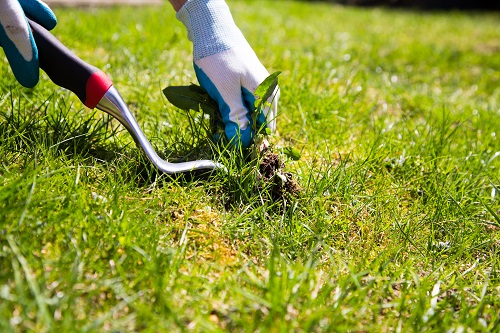
Pesky weeds. Weeds that have not responded to herbicide applications should be pulled out with a garden spade. Only use a post-emergent weed killer if the situation seems to be getting out of control.

lawn-care-2-1-300x200.jpgSummer

This is a mantra that will help you get through the middle of the grass-mowing period: the taller the grass the deeper the roots. The fewer weeds and the more water the soil can hold between waterings.

Here’s how you can ensure that your lawn is healthy and green:

Set the blade height of your mower to 3 inches.

It is better to water deeply and less frequently than to sprinkle, as this encourages shallow root growth. Lawns generally need 1 inch of water a week.

If lawns receive less water, they will most likely become dormant. The grass is still alive but the lawn should receive at least one inch of water every month. When the weather is rainy, your grass will begin to green again.

Spread some pie tins on the lawn to measure how much water is collected in a certain amount of time. A rain gauge (between $5 and $20) can help you track how much water your lawn gets naturally.

Clean underneath your mower at least once a month to avoid spreading lawn disease.

Remove large clumps of grass, even though it is fine to leave them on your lawn so they can decompose. Rake up leaves, twigs, and other debris regularly.

Early Fall

When the summer heat and dryness have passed, cooler temperatures are ideal for patching up bare or thin areas. Follow these simple instructions:

  • Remove all dead grass.
  • Use a garden trowel to break up the soil.
  • Compost is a great soil conditioner. Add one inch and work it in.

You can add grass seed designed for full sun or shade. The seed should be spread evenly over the area.

Use a hard-toothed rake to work in the seed to a soil depth of approximately half an inch.

Spread grass clippings on the patch to prevent soil drying.

You’ll need to water the area. Lightly water the patch once a week until the grass grows about an inch high.

Fall

In the fall, your main task is to keep debris and leaves off of your lawn. Use a mulching lawn mower to add organic matter and break up the leaves. Be sure to remove any clumps to prevent them from killing the grass.

Now is the perfect time to fertilize the lawn in the northern third of the country. As your grass goes dormant in the winter, it will store nutrients in the roots. Your lawn will then be ready to get a boost when the spring comes.

Call Conway Lawn Care Service now if you need help in maintaining your lawn.

Like our Facebook page for more great info about lawn care services.

Conway Lawn Care Service
Conway, SC 29526
843-353-2259
http://conwaylawncareservices.com/
Tuesday, May 2, 2023

Lawn Care Tips For Patchy Grass and Bare Spots


The bare patches on a lawn that is otherwise healthy and full may be caused by pet urine, heavy foot traffic or vehicle traffic, or pest infestations. You can patch up these areas with a variety of lawn care methods, but it is important to also consider the cause and try to correct it if possible.

If, for example, you have a bald patch because of constant foot traffic, then no solution will last unless the problem with traffic flow is also resolved. If the bald patches are due to a lawn-grub infestation, then new bare spots will appear as soon as the old ones have been repaired.

Two easy ways to restore bald patches on your lawn are to reseed or patch them with sod.

Lawn Care Tips To Address Bare Spots and Patchy Grass

Before You Begin

Then, examine the bare patches and determine the cause of the problem. Consider the best patching method for your situation, and when to apply it.

Seeds for patching:

The best time to seed is in the fall and later summer of northern zones with cold winters. This is when cool-season grasses are active. You can also plant in the early spring. Just make sure you do it early enough to ensure that the grass is well-established by the time summer arrives.

Late spring and early summer are considered the best times to plant grass seed in warm-winter areas where warm-season grazes dominate.

Repairing with Sod

When it comes to sodding, you have a wider window. Sodding a yard is similar to seeding. Early fall for cool-season grasses and late spring for warm-season grasses are the professional recommendations. If you want to fill in bare areas, it’s best to keep the patch moist during the entire growing season. Don’t forget that garden centers in some regions only have sod during certain seasons.

A shallow root system will form in two weeks. However, a deeper root system may take up to six weeks. It is best to plant patches of sod no later than mid-October if you live in an area where the hard frost occurs in early December.

Lawn Care Quick Guide

1. Patch your lawn. Fix thin or bare spots. If you have St. Augustine grass, it is better to remove dead turf or edge out bare areas.

2. Water is important. Watering new seeds and sod is essential. Keep your soil moist, but not soggy.

3. After six to eight weeks, feed the lawn. After six to eight weeks, feed your lawn with the nutrients it needs to grow.

4. Remove weeds and pests. Check to see if your bug or weed control products are safe for new grass.

How to Reseed Bare Patches

Seed is a simple and cheap way to patch up bare areas. You will only need to spend about 20 minutes, plus a little maintenance until your first or second mow. It will take up to six months to blend the patch into your lawn.

Rake the Area

Use a garden tool to remove all debris and dead grass. Examine the area to see if there are any grubs. You may need to correct a grub infestation if the damaged area of grass pulls easily up, similar to a rug.

Loosening the soil

Use a lawn rake with hard teeth or a garden cultivator to break up the soil. Consider using core aeration tools to aerate the soil if it seems very compacted. The tool is a simple manual device that cuts holes in soil by driving it into the ground.

Modify the soil

Mix the soil by raking in several inches of loamy compost. Use the top edge of the rake to spread some topdressing in the adjacent areas.

Plant Seeds

Choose the right seed for the microclimate of your area (sun, shade). The perennial ryegrass will germinate quickly and should be included in the mix.

Some “one-step” grass seed products already contain a weak starter fertilizer, compost and other additives. Some products contain recycled paper to hold the seeds and absorb moisture during germination. These products are not bad, but plain grass seed can be used to cover bare spots just as well and more cost-effectively.

Rake the Seeds

Spread the seeds evenly by lightly raking them in. It will also help to keep the seed in place by covering some of it with a thin soil layer. You may have to protect your area until the seeds germinate from birds that love to eat seedlings and new shoots. You can deter birds by using reflective tape, pinwheels, or short stakes.

Start Watering

Water the area lightly. Keep the seeds damp throughout the day. You can cover the patch with a burlap sheet if hot weather is an issue. This will shade the seeds and prevent them from drying out. Spreading a thin layer (about 1 cm thick) of wheat straw on top of the seeded surface will help to keep the seeds moist and in place.

You will need to water your patch daily, or even twice a day for the first 10 days until the seeds sprout. Continue to water every two days until the grass is mature. Then, you can water only once a week.

Cut When Ready

This will allow the patched areas to begin to blend with the rest. It may be necessary to mow around the patched area for two or even three mowing sessions. Some seed manufacturers recommend waiting seven weeks before cutting new grass.

lawn-care-2-300x200.jpgHow to Patch Bare Patches with Sod

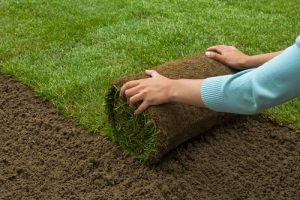
Filling the spot with a cut-out patch from a roll of grass sod is a quicker solution than seeding. If you need to treat several bare spots, this is the best method. You can get many patches out of a roll of sod that costs less than $10. You’ll be able to blend the patch into the grass within a few weeks.

Cut a Sod patch

Cut a small patch of sod with a garden knife or a sharp-edged shovel. It should be slightly larger than the area that is bare on your lawn. The patch should extend about 2 inches beyond the bare area into the healthy grass.

Cut out the Old Turf

Place the sod over the bare area. Then, remove the sod, and then the dead grass, as well as the healthy grass ring around the bare area, with a hand cultivator. Remove the soil layer below the grass. The goal is for the sod to sit at the same height as the rest.

Prepare the soil

Use a garden rake or cultivator to loosen the soil around your patch. The soil should be loose enough for the roots to quickly anchor themselves in the soil.

Plant the Sod Patch

Walk on the sod repeatedly to compact it into the soil. Water the area immediately and then repeat this process two or three more times per day for a few days until it is fully bonded.

It will take up to six weeks for the sod to fully root. It’s normal for the sod to be a different color initially. This will fade soon.

Call Conway Lawn Care Service now if you need expert help in maintaining your lawn.

Like our Facebook page for more great info about lawn maintenance services.

Conway Lawn Care Service
Conway, SC 29526
843-353-2259
http://conwaylawncareservices.com/

Wednesday, April 26, 2023

Weed Management for Lawns


Grass that is well-managed and vigorously grows will have weeds, but these are not a problem. To give your new lawn the best start, it is important to prepare the site and select turfgrass before you plant. Poor maintenance practices, such as improper irrigation or fertilization, can weaken a lawn and make it more susceptible to weeds. Compaction can also cause turfgrass stress and make it easier for weeds. Here are some weed management tips you need to know.

A weed control program that is integrated can help reduce weeds to a manageable level and eliminate large, unsightly patches. For most lawns or park turfgrass, total eradication is neither realistic nor necessary. However, with the right maintenance and care a lawn can become virtually free of weeds.

WEED IDENTIFICATION

Knowing the life cycle of weeds is essential for lawn care. In lawns, weeds can be divided into three general categories: grasses and sedges, broadleaves. Be sure to differentiate weedy grasses and similar-looking species of lawn grass.

WEED INVASION

Weeds can invade turfgrass that has been over- or underestimated in water, fertilized incorrectly, improperly cut, or is highly compacted. Weeds can also invade lawns that are weakened by insect pests or plant diseases. This is because the open spaces in these lawns make it easier for them to grow. The majority of weed invasions are preventable with good lawn maintenance and can be remedied by overseeding. Turfgrass-invading weeds are usually associated with certain conditions. Identification of weed species can give a clue to the problem that is causing the infestation and what you can do to reduce it.

Weed Management Before Planting

Prepare Your Site

The foundation of a healthy lawn is a site that has been properly prepared. Remove existing vegetation before planting and prepare the area. Irrigate the area to encourage weeds. Repeat this process with a shallow cultivating or application of nonselective (described below) herbicides such as clove oil or glyphosate. When using seed or sod, this is crucial.

Choose the Right Turfgrass for Your Area

Turfgrasses vary in their tolerance to extreme temperatures, shade, and drought as well as the amount of wear. The grasses are divided into cool-season and warmer-season grasses based on their preferred temperature and active growth periods.

weed-management-2-300x199.jpgNEWLY PLANT LAWNS: WEED MANAGEMENT

Even if the planting site is carefully prepared, weeds are likely to develop on a newly laid lawn. As soon as weeds appear, remove them by hand. It will stop them from reproducing seeds and spreading the invasion. Weeds can be controlled by timing irrigation, mowing and fertilization. Turfgrass roots are relatively short in the first few weeks following planting. They only reach the top few inches. Lightly water the roots to avoid soaking the soil. Water deeply and infrequently once the turfgrass is established to encourage healthy root growth. When the roots of the new lawn are well-established in the soil, mow it for the first time. Make sure that the soil is dry enough to prevent the turfgrass from being ripped out of the ground.

WEED MANAGEMENT FOR ESTABLISHED LAWNS

Irrigation

Many lawns have been watered in the wrong way. Weeds can invade turfgrass if irrigation is not done properly. Poorly irrigated grasses are home to weeds such as crabgrass, annual bluegrass, dallisgrass, and nutsedge. For a healthy lawn to be maintained, it is important that the water is evenly distributed. Sprinkler heads that are damaged, blocked, or placed too low or high can’t reach all parts of the lawn, and this may result in dead or dry spots.

Mowing

The height of mowing varies depending on the turfgrass species. Too short mowing can cause turfgrass to weaken and encourage weed growth. If some grasses do not get mowed, they can cause the thatch to build up and reduce water penetration, weakening turfgrass.

When grasses are growing, mow them more often. Standard guidelines suggest removing no more than 1/3 the blade of a leaf at a time. It can take a while for the grasses to recover if too much is cut at once. Weeds will have a chance to grow if this happens.

lawn-care-2-300x225.jpgFertilizing

Follow fertilization guidelines to maintain a healthy grass. Start a regular program of fertilization approximately six weeks after the planting. Lawns should be fertilized four times per year, while they are growing. However, the amount of nitrogen applied per application must not exceed 1 pound per 1,000 square foot.

Thatch

Regular thatch removal can help your lawn stay healthy and compete with weeds. Thatch is an organic layer that forms between turfgrass blades. It is perfectly normal to have a thin layer of thatch. This can even be beneficial, as it helps limit the germination of weeds.

Aeration

Over time, heavy traffic can compact the soil. Compacted soil restricts oxygen, water, and nutrients from reaching the roots. This causes turfgrass to grow slower and is more susceptible to weed infestations. Aeration can help reduce soil compaction. Aerating lawns that are on clay soils, or those with heavy foot traffic or equipment may be necessary several times per year. Lawns with less activity might only require aeration once or twice a season.

Hand weeding

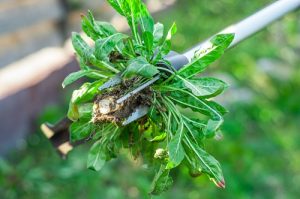
Hand pulling weeds is not always necessary, if you maintain your lawn regularly and properly. Hand weeding can be very important in preventing infestations such as creeping woodsorrel, nutsedge, dandelion spurge, dallisgrass and bermudagrass.

Herbicides

Herbicides are not usually needed if your lawn is well maintained. Use them in conjunction with a good maintenance program and an integrated management plan. Not all herbicides are suitable for all lawn types. Before choosing an herbicide, you must first identify the weeds and turfgrass species that are causing problems.

Call Conway Lawn Care Service now if you need expert help in taking care of your lawn.

Conway Lawn Care Service
Conway, SC 29526
843-353-2259
http://conwaylawncareservices.com/

Tuesday, April 18, 2023

Lawn Care Tips: All About Fertilizer


Beautiful lawns do not just happen. They are carefully planned and designed. The creation of a lawn will never be complete without the use of fertilizer. There is a lot of confusion about fertilizers and their use. Here are some lawn care tips you need to know.

To choose the best fertilizer, you must first determine what nutrients your soil contains. This can be done by conducting a soil analysis.

The soil nutrients, whether you place them there or they occur naturally, work together to assist grass in achieving its primary goal. Photosynthesis is the primary purpose of grass. The process of photosynthesis is how grass produces its own food.

Photosynthesis occurs when the blades of the plant absorb sunlight, and the roots reach down into the soil in order to get the nutrients needed to perform their function. This is an oversimplification of a complex process. We will not go into detail.

If you don’t fertilize your lawn, it will be completely dependent on the nutrients in the soil. As you may know, the soil around many homes isn’t very good. Contractors rarely give much thought to the soil quality after a home is built. It doesn’t matter how the land is graded, as long as it is done correctly.

Lawn Care Tips

MICRONUTRIENTS & MACRONUTRIENTS

To stay healthy and perform essential plant functions, lawn grasses require several micronutrients as well as macronutrients.

What is in lawn fertilizer?

What is in fertilizer, you ask? The three numbers on the bag of fertilizer represent three macronutrients: Phosphorus (in that order), Nitrogen and Potassium.

The three numbers on the bag are the most important nutrients for grass. The other nutrients are still important for the health and life of the grass.

The numbers on the bag indicate the weight percentage of each element.

lawn-care-2-300x200.jpgTypes of Fertilizer

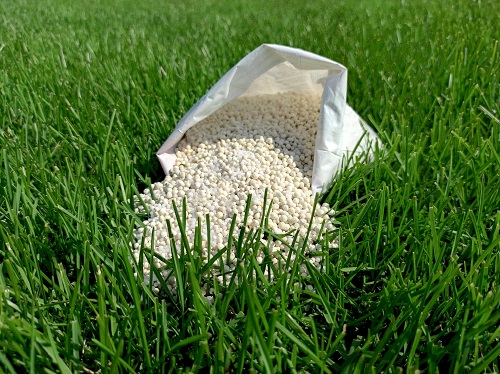
The most common type of synthetic fertilizer is liquid. It also comes in granular form. Granular fertilizers require less equipment and are easier to use. You only need a rotary spreader or a drop spreader.

Liquid Fertilizer

Unless the liquid lawn fertilizer is a small hose-end type like Miracle Gro, it may require special equipment for application. The majority of liquid fertilizers are only available to professional companies, due to the high cost of equipment needed to quickly cover large areas.

For small lawns, you can also use a backpack or hand-held sprayer. You can buy 10 or 20-gallon sprayers in your local farm and home shop for larger lawns. The majority of sprayers require a 12-volt battery.

Which is the best liquid or dry fertilizer? Both perform about the same. Only licensed professional lawn care experts can purchase this expert-grade fertilizers, but there are many varieties available for homeowners.

When used on turfgrass the effects of fertilizers are not as bad as once believed.

All-Mineral vs. Slow Release Lawn Fertilizer

Not all fertilizers, however, are the same. Some fertilizers are called “all mineral”, meaning that all elements are released as soon as the water is applied.

Mineral lawn fertilizers tend to be the least expensive. You can buy a 50lb. bag at some feed stores for less than $10.00. The bags are often devoid of instructions on storage, safe use, or how much to apply. On the bag I saw, it said that you would need to contact the company to get this information.

They must be used with caution due to their high salt content and thoroughly watered after use in order to avoid any burning of the lawn. While these fertilizers are useful in certain situations, there is a safer and more effective lawn fertilizer available for the majority of homeowners.

Slow Release Nitrogen

Fertilizers that are more expensive will often contain ingredients of higher quality and may have multiple forms of nitrogen available. At least one nitrogen form in the bag is usually slow-release. Blending different ingredients that release at different rates allows them to be marketed under the names “spring”, “summer”, “fall”, or “winterizer”.

fertilizing-services-300x225.jpgORGANIC LAWN FERTILIZERS

Organic fertilizers are available in a variety of forms and will contain a greater range of micronutrients.

Certified Organic lawn fertilizer means that it is “all-natural” and does not contain synthetic materials. It doesn’t necessarily mean that it hasn’t been processed. Who wants raw manure? These products slowly fertilize grass as soil microorganisms convert the organic matter to elements that the grassroots can absorb. It is easy to over-fertilize organic lawn fertilizer because it’s safe.

Organic Types

Milorganite is a human sludge that comes from Milwaukee Sewage Treatment Plants. It is a very slow-release product and only used in the summer.

Manure: Chicken, turkey, horse, and cattle products. Bat Guano is one of the more expensive products.

Plant by-products, such as corn gluten. Some commercial products are made from food waste.

Bridge Products

Bridge products are organic fertilizers blended with synthetics.

Some lawn fertilizers contain up to 90% organic matter, and they are blended for the best performance at different times of the season. The soil microorganisms in the soil are less active during cold weather, and more active during summer. Therefore, summer blends contain higher amounts of organic material. In cooler weather, the synthetics combined with organics will give the grass immediate nutrients.

It is important to know what your soil contains before you start your fertilization program and buy your first bag. This will allow you to correct any problems that may arise. Below you will find links to detailed information about how to analyze a soil report and how to collect a sample of soil.

Find out more about lawn fertilizers, fertilization, and how to use them. Call Conway Lawn Care Service now.

Like our Facebook page for more great info about lawn maintenance services.

Conway Lawn Care Service
Conway, SC 29526
843-353-2259
http://conwaylawncareservices.com/